
I remember sitting in a glass-walled conference room in Palo Alto, staring at a stack of applications for a critical product role. I had a caffeine headache, the air conditioning was humming too loudly, and honestly? I was bored. Most of what I was reading felt like it had been spat out by a broken machine—stiff, lifeless, and utterly devoid of personality. It’s the same trap so many talented people fall into: they focus so much on “playing the game” that they forget to actually speak. If you’re currently obsessing over every syllable to avoid common mistakes in cover letter writing, you might actually be doing the exact opposite of what a hiring manager wants to see.
I’m not here to give you a list of grammatical nitpicks or some academic lecture on formal syntax. I’ve sat on both sides of the desk, and I know that a great cover letter isn’t about perfection; it’s about connection. In this guide, I’m going to pull back the curtain on the tactical errors that kill your momentum and show you how to inject your true self into your applications. We’re going to strip away the corporate fluff so you can land the roles that actually align with your purpose and prosperity.
The High Cost of Robotic Generic Professional Cover Letter Tips

I’ve sat on both sides of the hiring table during those frantic Series C scaling phases. I’ve seen hundreds of applications fly across my screen, and let me tell you: the “copy-paste” method is a silent career killer. When you rely on a template that sounds like it was generated by a middle-manager in a trance, you aren’t just being efficient; you’re being invisible. Most people think they’re following professional cover letter tips by staying safe, but in reality, they are just blending into the gray background of the recruiter’s inbox.
The real danger isn’t just a boring tone; it’s the missed opportunity for connection. If you aren’t learning how to tailor your cover letter to the job description with actual nuance, you’re essentially telling the hiring manager that you don’t care enough to do the work. You might have the perfect pedigree, but if your words lack a pulse, you’ll never get past the initial screen. We aren’t just looking for a list of skills—we are looking for the human being behind the bullet points.
How Cover Letter Formatting Errors Signal a Lack of Purpose

When I was sitting in those Series C boardrooms, I learned one thing quickly: details are the silent language of competence. If you send over a document riddled with cover letter formatting errors, you aren’t just making a visual mistake; you’re sending a signal that you lack attention to detail. To a hiring manager, a messy layout suggests that you’ll likely bring that same lack of intentionality to your high-stakes projects.
It’s not just about the font size or the margins, though those matter. It’s about the energy the document radiates. When you fail to maintain an effective cover letter structure, you’re essentially telling the recruiter that you haven’t taken the time to organize your own thoughts, let alone theirs. If you want to improve your job application success rate, you have to treat the document as a reflection of your professional standard. You wouldn’t show up to a pitch meeting with a crumpled shirt and a disorganized notebook; don’t let your application tell the world that you’re half-hearted about your own purpose.
Five Ways You're Accidentally Sabotaging Your Own Story
- Stop treating your cover letter like a summary of your resume. I’ve seen a thousand resumes in my time, and if you just repeat the same bullet points in paragraph form, you’re wasting the hiring manager’s time. Use this space to tell them the “why” behind the “what”—give them the context your resume is too cramped to hold.
- Kill the “To Whom It May Concern” ghost. It’s the fastest way to signal that you haven’t done a lick of research. In a world where everyone is looking for a connection, starting with a generic, cold greeting tells the reader you’re just casting a wide net rather than aiming for a specific purpose. Find a name, or at least a specific department.
- Watch out for the “I” trap. It’s easy to fall into the rhythm of “I did this,” “I want that,” and “I am great at this.” But remember, the company isn’t hiring you to fulfill your personal checklist; they’re hiring you to solve their problems. Shift the focus from what the role does for you to how your unique toolkit solves their specific pain points.
- Delete the empty superlatives. Words like “passionate,” “hardworking,” and “motivated” have become white noise in the tech world. They don’t mean anything without evidence. Don’t tell me you’re a “transformative leader”—show me the specific moment you steered a team through a pivot or a crisis. Evidence beats adjectives every single time.
- Avoid the “Desperation Drift.” There’s a fine line between being enthusiastic and sounding like you’ll take any seat at the table. If your letter sounds like a plea for employment rather than a strategic proposal of value, you lose your leverage. Write from a place of professional equality, not supplication.
Don't Just Apply—Connect
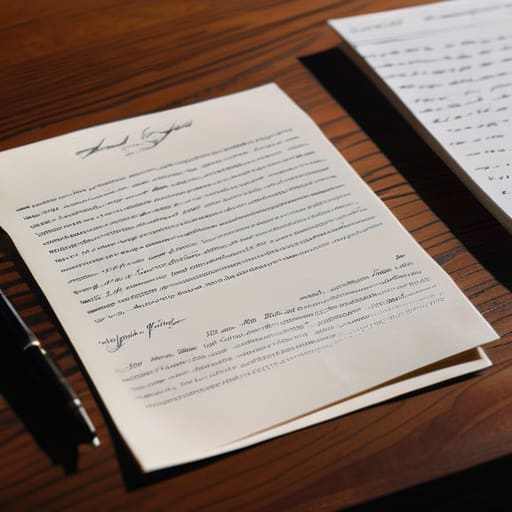
At the end of the day, a cover letter isn’t just a hurdle to clear or a box to check on an application portal. It’s your first real chance to prove that you aren’t just another line item on a spreadsheet. We’ve talked about how generic, robotic language kills your momentum and how sloppy formatting can signal a lack of intentionality. When you fall into these traps, you aren’t just making a clerical error; you are erasing your own humanity before you even walk through the door. Avoid the jargon, fix the layout, and stop treating this process like a mindless administrative task.
I’ve sat in countless hiring rooms during high-stakes funding rounds, and I promise you this: the people who stand out are the ones who bring their whole selves to the table. Your career is too important to be reduced to a series of templated sentences and corporate buzzwords. Use this document to tell your story, to show your grit, and to demonstrate that you possess both the skill and the unwavering purpose required to make an impact. Go out there, be authentic, and build a professional life that actually feels like yours.
Look, I’ve sat on both sides of the hiring table, and I can tell you that the biggest mistake people make is trying to navigate these high-stakes transitions in a vacuum. It’s easy to get stuck in your own head, overthinking every syllable until your message loses its heartbeat. Sometimes, you just need a space to test your narrative and see how your ideas land in a real-time conversation. If you’re feeling isolated in your job search, connecting with others through a platform like Sexlondon chat can actually be a surprisingly effective way to sharpen your communication skills and find the clarity you need before you hit ‘send’ on that application.
