I remember the day my niece looked at me with those wide, innocent eyes and asked, “Why don’t we just print more money if we run out?” I stood there, frozen, my coffee cup halfway to my lips, realizing I hadn’t an ounce of wisdom to offer. Here was this tiny human, who believed in the infinite magic of the ATM, and I, her supposed guide in all things grown-up, was stumped. It hit me then that teaching kids about money is like trying to explain jazz to a cat; you need patience, creativity, and the acceptance that not everything will hit the right note.
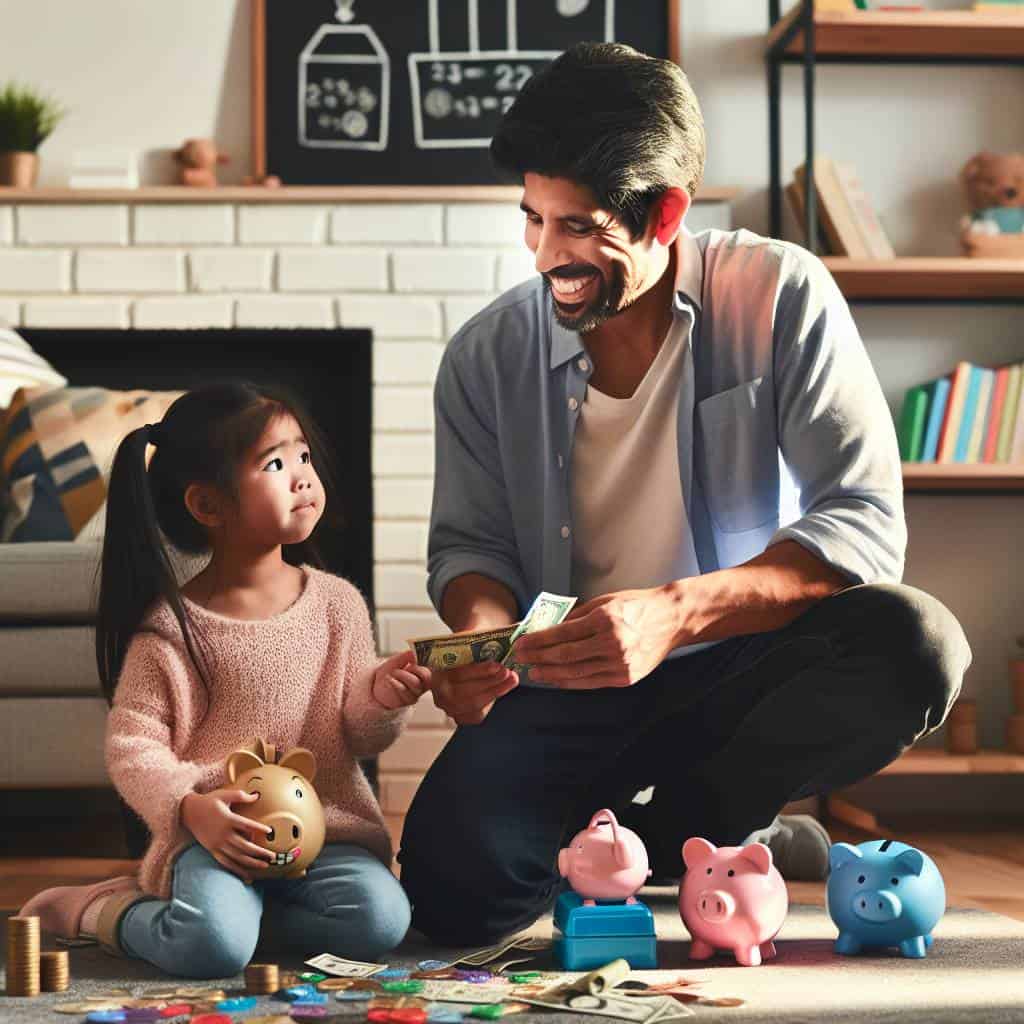
But let’s navigate this jungle of financial literacy together, with all its pitfalls and surprising vistas. I promise not to bore you with lectures that drone like a broken subway announcement. Instead, we’ll explore why allowances aren’t just cute little handouts and how saving can be more than just a dusty piggy bank on a shelf. We’ll dive into the real basics—where the mundane transforms into the meaningful, and maybe, just maybe, you’ll walk away with a few new tricks up your sleeve.
Table of Contents
Allowance: The First Step in My Kids’ Financial Circus
Picture this: my kids, wide-eyed and eager, clutching their weekly allowance like it’s a golden ticket to Candyland. Their eyes dance with the promise of spending, but I see beyond the sugar rush. This is the moment they step into the financial circus—where allowance is not just pocket money, but the first act in a lifelong show of fiscal acrobatics. It’s a tightrope walk between impulsive spending and prudent saving, and I’m the ringmaster, guiding them through the chaos with a firm but gentle hand.
Let’s be real: tossing a few bucks their way isn’t a magic spell for financial literacy. It’s a lesson in disguise, a subtle orchestration of choices and consequences. When my daughter contemplates whether to splurge on the latest glitter-infused slime or stash her dollars for a rainy day, that’s where the real learning happens. It’s about teaching them the art of prioritizing, of understanding that money, like time, is finite. The allowance is their first taste of freedom, a step into a world where every choice has weight. And as much as I want to swoop in and micromanage their little budgets, I let them stumble, because every stumble is a step toward mastering the high-wire act of financial savvy.
So, in this big top of life, the allowance is their ticket to understanding that money doesn’t grow on trees—or in my wallet. It’s about nurturing a sense of responsibility, a respect for the value of what they hold in their small hands. I watch them learn to juggle, not just pennies, but priorities. And in this circus of decisions, I hope they discover that the greatest trick is not in spending it all, but in knowing when to hold on. Here’s to the first step in their financial journey, a colorful, chaotic, and utterly essential part of growing up.
Coins of Wisdom
Teaching kids about money isn’t about giving them an allowance—it’s about showing them that every penny has a story and every dollar a dream.
The Art of Financial Storytelling
In the end, teaching kids about money is less about the arithmetic of dollars and cents and more about the narrative they craft from it. It’s a cityscape of choices and consequences, where every allowance becomes a plot twist and every saving decision a subplot. I’ve watched my kids grapple with this urban jungle of finance, stumbling and soaring, their piggy banks clinking like a chorus of tiny, metallic dreams. It’s not a flawless symphony, but it’s theirs, raw and real, a reflection of the city we call home.
And as I stand back, observing their financial escapades unfold, I realize that I’ve been learning too. Witnessing their growth reframes my own perspective, turning the mundane into the extraordinary. It’s a reminder that in this sprawling metropolis of money and meaning, we are all storytellers at heart. My hope? That they continue to write their own financial tales, vibrant and unique, unfettered by the blandness of the commonplace. Because, after all, life is too short for uninspired prose.
